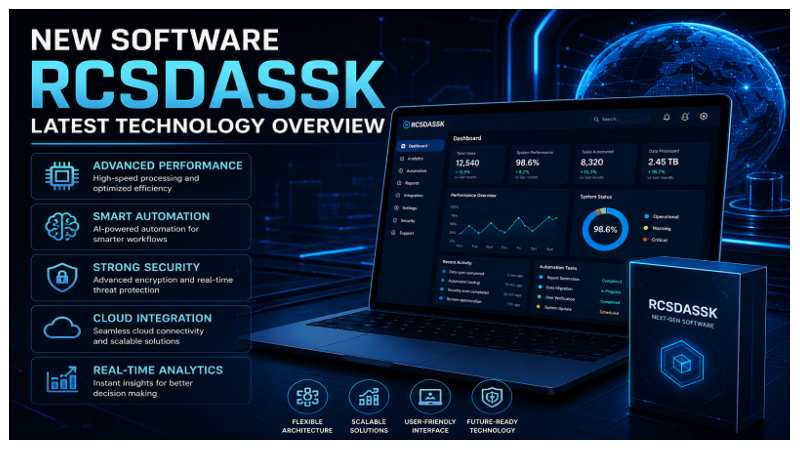
RCSDASSK is a next-generation software platform built to handle the increasing complexity of modern digital operations. It combines intelligent automation, high-speed data processing, and flexible system architecture into a single ecosystem. Unlike traditional software that focuses on isolated tasks, RCSDASSK is designed to operate as an interconnected solution capable of supporting large-scale, real-time environments.
Its importance lies in how it transforms workflows. Businesses today rely heavily on data, speed, and accuracy. RCSDASSK helps organizations reduce manual effort, minimize errors, and improve overall productivity by automating critical processes and delivering actionable insights instantly.
1. The Rise of Next-Generation Software Solutions
The digital world has shifted dramatically over the past decade. Traditional software systems are no longer sufficient to meet the demands of real-time analytics, global connectivity, and scalable operations. This has led to the rise of next-generation platforms like RCSDASSK, which are built with adaptability and intelligence at their core.
Modern software must integrate with cloud systems, support AI-driven decisions, and operate across multiple devices seamlessly. RCSDASSK embodies these requirements, making it a powerful solution for businesses aiming to stay competitive in a rapidly evolving environment.
Purpose of This Technology Overview
This comprehensive guide explores every aspect of RCSDASSK software, including its architecture, features, benefits, and future potential. It is designed to help readers—from beginners to professionals—understand how the platform works and how it can be applied effectively in real-world scenarios.
2. Understanding RCSDASSK Technology
Core Concept Behind RCSDASSK
The foundation of RCSDASSK lies in its ability to combine automation with intelligent processing. It uses advanced algorithms to analyze data, automate workflows, and optimize performance without constant human intervention.
This concept allows systems to become more responsive and efficient, enabling users to focus on strategic tasks rather than repetitive operations.
How It Fits into Modern Digital Systems
RCSDASSK integrates seamlessly into modern digital ecosystems. Whether it’s cloud platforms, enterprise systems, or IoT networks, the software ensures smooth communication between different components.
This interoperability is essential for organizations that rely on multiple technologies to operate effectively. RCSDASSK acts as a bridge, connecting systems and enabling unified operations.
Key Objectives of the Software
The main goals of RCSDASSK include:
- Enhancing operational efficiency
- Reducing costs through automation
- Improving decision-making with real-time data
- Providing scalable solutions for growing businesses
These objectives make it a valuable tool for organizations of all sizes.
3. Key Features of New Software RCSDASSK
Advanced Processing Capabilities
RCSDASSK is engineered to handle high volumes of data with speed and precision. Its processing engine is optimized for multitasking, allowing it to perform complex computations without slowing down.
This capability is especially important for industries that rely on real-time data analysis.
Intelligent Automation Functions
Automation is one of the standout features of RCSDASSK. The software can execute repetitive tasks automatically, such as data entry, system monitoring, and workflow management.
By reducing manual intervention, it not only saves time but also improves accuracy and consistency.
User-Centric Interface Design
The platform is designed with users in mind. Its intuitive interface ensures that even those with minimal technical knowledge can navigate and use the software effectively.
Clear layouts, organized dashboards, and easy access to tools make it highly user-friendly.
4. System Architecture and Design
Modular and Scalable Framework
RCSDASSK uses a modular architecture, meaning its components can be developed, updated, or replaced independently. This flexibility allows businesses to customize the software according to their needs.
Scalability ensures that the system can grow alongside the organization without requiring a complete overhaul.
Integration with Existing Systems
One of the biggest challenges in adopting new software is compatibility. RCSDASSK addresses this by offering seamless integration with existing systems, reducing downtime and implementation costs.
Cloud-Based and Hybrid Infrastructure
The software supports both cloud and hybrid deployment models. Cloud-based solutions offer accessibility and scalability, while hybrid systems provide greater control and security.
This flexibility allows businesses to choose the deployment method that best suits their requirements.
5. Performance and Efficiency
Speed Optimization Techniques
RCSDASSK incorporates advanced optimization techniques to ensure fast processing speeds. This includes efficient algorithms, load balancing, and intelligent resource allocation.
Resource Management and Allocation
Efficient use of system resources is critical for performance. RCSDASSK dynamically allocates resources based on workload, ensuring optimal performance at all times.
Handling Large-Scale Operations
The platform is designed to manage large-scale operations without compromising performance. This makes it ideal for enterprises with high data volumes and complex workflows.
6. Smart Technology Integration
AI and Machine Learning Capabilities
RCSDASSK leverages AI and machine learning to enhance its functionality. These technologies enable predictive analytics, pattern recognition, and automated decision-making.
Data Analytics and Real-Time Insights
Real-time analytics provide users with immediate insights into system performance and business operations. This allows for quick adjustments and better decision-making.
Automation and Workflow Optimization
By automating workflows, RCSDASSK reduces inefficiencies and ensures that processes run smoothly from start to finish.
7. User Experience and Interface
Clean and Intuitive Dashboard
The dashboard is designed to present information clearly and concisely. Users can easily monitor performance, track progress, and access tools.
Easy Navigation and Accessibility
Navigation is simple and straightforward, allowing users to move between features without confusion.
Customization and Personalization Options
Users can customize the interface to suit their preferences, improving usability and productivity.
8. Security and Data Protection
Built-In Security Mechanisms
RCSDASSK includes advanced security features such as firewalls, authentication systems, and monitoring tools to protect against threats.
Data Encryption and Privacy Controls
Encryption ensures that sensitive data remains secure during storage and transmission. Privacy controls allow users to manage access and permissions.
Threat Detection and Prevention
The software continuously monitors for potential threats and takes proactive measures to prevent security breaches.
9. Compatibility and System Requirements
Supported Platforms and Devices
RCSDASSK is compatible with various platforms, including desktops, laptops, and mobile devices.
Minimum and Recommended Specifications
The software provides clear guidelines for system requirements to ensure optimal performance.
Cross-Platform Functionality
Cross-platform support allows users to access the software from different devices without compatibility issues.
10. Applications and Use Cases
Business and Enterprise Solutions
RCSDASSK helps businesses automate processes, analyze data, and improve efficiency.
Developer and IT Applications
Developers use the platform for coding, testing, and managing systems.
Industry-Specific Implementations
The software can be tailored for industries such as healthcare, finance, retail, and manufacturing.
11. Benefits of Using RCSDASSK Software
Increased Productivity and Efficiency
Automation and intelligent features enable users to complete tasks faster and more accurately.
Cost Reduction and Scalability
Efficient resource usage reduces operational costs, while scalability supports business growth.
Improved Workflow Management
The software streamlines workflows, making processes more organized and efficient.
12. Challenges and Limitations
Learning Curve for New Users
While user-friendly, new users may need time to fully understand advanced features.
Integration Challenges
Integrating with legacy systems may require additional configuration and expertise.
Cost and Resource Considerations
Initial implementation may involve investment in infrastructure and training.
13. Future Developments and Updates
Upcoming Features and Enhancements
Future updates are expected to include improved AI capabilities, enhanced security features, and better user interfaces.
Long-Term Development Roadmap
The roadmap focuses on continuous innovation, ensuring the software remains relevant in a changing digital landscape.
Role in Future Technology Trends
RCSDASSK is expected to play a key role in future technologies, including smart systems and automated environments.
14. Frequently Asked Questions
What Is RCSDASSK Software Used For?
It is used for automation, data analysis, and improving operational efficiency.
Is It Suitable for Beginners?
Yes, its intuitive design makes it accessible to users with varying skill levels.
How Secure Is the Software?
It offers robust security features to protect data and systems.
Does It Support Advanced Projects?
Yes, it is capable of handling complex and large-scale projects.
15. Conclusion
Summary of Key Insights
RCSDASSK is a powerful and flexible software solution that combines advanced technology with practical functionality. It supports automation, scalability, and intelligent decision-making.
Importance of Adopting Modern Software
In today’s competitive digital environment, adopting modern software solutions like RCSDASSK is essential for growth and efficiency.
Final Thoughts on RCSDASSK Technology
As digital transformation continues to accelerate, RCSDASSK stands out as a forward-thinking solution that can help businesses and developers adapt, innovate, and succeed in the future.