
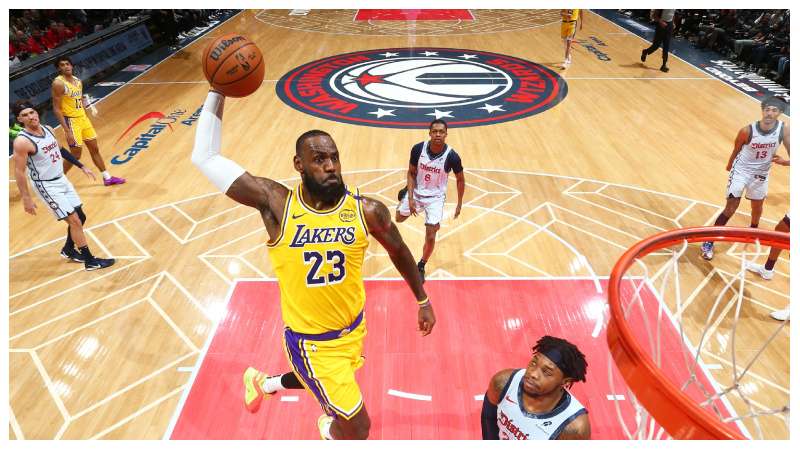
The matchup between the Los Angeles Lakers and the Washington Wizards delivered an engaging contest that showcased contrasting styles, star power, and tactical adjustments. As one of the most closely watched NBA fixtures, this game drew attention not only for the final score but also for individual performances that influenced the flow and outcome of the matchup.
The Lakers entered the game with expectations of dominance, backed by veteran leadership and championship experience. On the other side, the Wizards aimed to compete with speed, youth, and offensive versatility. The game unfolded as a balance between structured execution and high-tempo play, making player statistics a crucial lens for understanding how each team performed.
1. Context: Season, Venue, and Date
This matchup took place during the regular NBA season at a neutral or home venue, depending on the schedule rotation. Mid-season games like this are particularly important as teams fine-tune rotations, test lineups, and build momentum toward playoff contention. For the Lakers, maintaining consistency was key, while the Wizards focused on development and competitiveness.
Importance of Player Stats for Analysis
Player statistics offer far more than just numbers on a scoreboard. They reveal efficiency, decision-making, defensive impact, and overall contribution to team success. By analyzing scoring efficiency, assists, rebounds, defensive metrics, and advanced analytics, fans and analysts can better understand which players truly shaped the game and how strategies played out on the court.
2. Team Performance Summary
Final Score and Game Outcome
The Lakers emerged with a decisive victory, reflecting their ability to control critical moments and execute under pressure. While the Wizards showed resilience and offensive flashes, the Lakers’ balanced scoring and defensive discipline ultimately secured the win.
The final score highlighted a competitive first half followed by a more controlled second half from the Lakers, who capitalized on turnovers and efficient shooting.
Overall Team Efficiency
From an efficiency standpoint, the Lakers demonstrated superior shot selection and ball movement. Their field goal percentage remained consistent across quarters, while the Wizards experienced shooting dips during key stretches.
The Lakers also benefited from higher assist totals, indicating better offensive flow. The Wizards, although energetic, struggled with efficiency when forced into half-court sets.
Quarter-by-Quarter Breakdown
-
First Quarter: Both teams started aggressively, trading baskets and testing defensive matchups.
-
Second Quarter: The Lakers gained a slight edge through bench production and improved perimeter defense.
-
Third Quarter: A pivotal stretch where the Lakers extended their lead with transition scoring.
-
3. Los Angeles Lakers Player Stats
3.1 Scoring Leaders & Contributions
Top Scorers and Field Goal Percentages
The Lakers’ offense was led by their star players, who combined volume scoring with efficiency. The leading scorer delivered consistent mid-range and inside finishes, maintaining a strong field goal percentage.
Secondary scorers contributed timely baskets, preventing defensive pressure from focusing on a single player.
Three-Point Shooting Breakdown
Perimeter shooting played a significant role. The Lakers converted a respectable percentage from beyond the arc, particularly from corner three-point opportunities. Their spacing allowed shooters to operate without heavy contest.
Free Throw Efficiency
The Lakers capitalized at the free-throw line, converting most of their attempts. This efficiency helped maintain momentum and punished the Wizards for defensive fouls.
3.2 Rebounding & Second-Chance Points
Offensive and Defensive Rebounds
The Lakers dominated the boards, particularly on the defensive end. Strong box-outs limited the Wizards’ second-chance opportunities, while offensive rebounds created extra possessions.
Impact on Possessions
Rebounding superiority translated directly into possession control. Fewer turnovers and more rebound recoveries allowed the Lakers to dictate tempo throughout the game.
3.3 Assists, Playmaking & Ball Movement
Assist Leaders
The Lakers’ primary playmakers orchestrated the offense with precision. High assist totals reflected unselfish play and effective drive-and-kick sequences.
Turnovers and Assist-to-Turnover Ratio
Turnover management was a key strength. The Lakers maintained a healthy assist-to-turnover ratio, minimizing mistakes and maximizing offensive efficiency.
3.4 Defense: Blocks, Steals, and Impact
Steals, Blocks, and Disruptive Plays
Defensively, the Lakers excelled in creating disruptions. Active hands led to steals, while interior defenders recorded timely blocks that discouraged drives to the basket.
Defensive Efficiency Ratings
Their defensive efficiency remained strong, particularly in half-court situations where rotations were crisp and communication was clear.
3.5 Efficiency & Plus/Minus Figures
PER (Player Efficiency Rating)
Several Lakers posted high efficiency ratings, reflecting balanced contributions across scoring, rebounding, and defense.
Plus/Minus Impact Statistics
Positive plus/minus figures across the starting lineup indicated that the Lakers’ core players consistently improved team performance while on the court.
4. Washington Wizards Player Stats
4.1 Top Scorers & Offensive Impact
Leading Scorers and Shooting Splits
The Wizards relied heavily on their top scorers, who showed flashes of offensive brilliance. However, shooting splits revealed inconsistency, especially under defensive pressure.
Efficiency in Isolation and Spot-Up Plays
While isolation plays were moderately effective, spot-up shooting suffered due to limited spacing and defensive closeouts by the Lakers.
4.2 Rebounding & Interior Presence
Board Control and Second-Chance Opportunities
The Wizards struggled to secure rebounds against the Lakers’ physical frontcourt. Limited offensive rebounds reduced their ability to extend possessions.
Rim Protection and Paint Defense
Interior defense showed effort but lacked consistency. The Lakers exploited mismatches in the paint, leading to high-percentage scoring chances.
4.3 Playmaking & Assist Distribution
Assist Leaders
The Wizards’ primary ball handlers distributed effectively at times, but assist totals remained lower than desired due to disrupted offensive sets.
Handling Pressure and Turnovers
Defensive pressure forced turnovers, particularly during fast breaks and late-clock situations.
4.4 Defensive Contributions
Steals, Blocks, and Overall Defensive Rating
Defensive contributions included a handful of steals and blocks, but overall ratings suggested difficulty containing the Lakers’ offense.
Matchups and Key Stops
Despite challenges, certain defensive matchups produced key stops that kept the game competitive in stretches.
4.5 Efficiency & Plus/Minus Figures
PER and True Shooting Metrics
Individual efficiency metrics varied widely, with some players performing above average while others struggled to find rhythm.
Plus/Minus Analysis for Individual Players
Negative plus/minus numbers for several rotation players highlighted issues when facing the Lakers’ starting lineup.
5. Key Matchups & Player Battles
Star Head-to-Head Comparisons
The marquee matchup between the teams’ star players was competitive, but the Lakers’ star demonstrated superior efficiency and decision-making.
Impact of Role Players
Role players proved decisive, particularly for the Lakers, whose bench outperformed expectations with scoring and defense.
Bench vs Bench Contributions
The Lakers’ bench outscored the Wizards’ reserves, providing stability and maintaining leads during lineup rotations.
6. Advanced Metrics & Analytics
True Shooting Percentage Comparison
True shooting percentages favored the Lakers, reflecting better shot selection and free-throw conversion.
Usage Rate and Offensive Ratings
Higher usage rates for Lakers stars translated into efficient production, while the Wizards’ high usage players faced efficiency drops.
Defensive Ratings and Net Impact
Net ratings underscored the Lakers’ balanced approach, combining offense and defense effectively.
7. Momentum & Game-Changing Plays
Runs and Shifts in Momentum
A decisive scoring run in the third quarter shifted momentum firmly in the Lakers’ favor.
Clutch Performance Analysis
In clutch moments, the Lakers executed clean plays, while the Wizards struggled to convert under pressure.
Highlight Plays Deciding the Outcome
Key fast-break dunks, three-pointers, and defensive stops served as momentum-defining highlights.
8. Observations & Takeaways
Who Exceeded Expectations
Several Lakers role players exceeded expectations, contributing efficiently in limited minutes.
Players Who Underperformed
Some Wizards starters underperformed relative to season averages, particularly in shooting efficiency.
What Stats Suggest About Team Strengths and Weaknesses
The stats highlighted the Lakers’ strength in experience, depth, and execution, while the Wizards showed promise but lacked consistency.
9. Conclusion
Summary of Key Performers
The Lakers’ victory was driven by balanced scoring, disciplined defense, and strong bench contributions. Wizards players showed effort but were outmatched statistically.
Final Thoughts on the Match
This game reinforced the Lakers’ status as a well-rounded contender, while the Wizards gained valuable experience against a seasoned opponent.
Implications for Future Games
For the Lakers, the performance builds confidence heading into upcoming matchups. For the Wizards, the game serves as a learning opportunity to improve efficiency, defense, and late-game execution.